
In my last post, I wrote about win-win contracting and focused on one of, if not the, most vexing provisions in a technology agreement, the intellectual property (IP) indemnity. Recall that here the customer asks the vendor to cover its costs, expenses, and other losses from any third-party IP infringement claims directed at the customer’s use of the vendor’s products. This is risk shifting, pure and simple, a zero-sum game, if there ever was one. Or is it? What if the vendor has identified and implemented an efficient way to mitigate IP risk, by buying on the open market and via private sales relevant patents, securing license on transfer provisions with suppliers and customers, entering into sufficiently broad cross licenses, and so on. If the amortized costs to the vendor to achieve this patent peace are less than the incremental new business from the customer, then this is a win-win. Just a thought.
I have now written five installments of my contracting best practices series. Of course, more are possible. The negotiation process can be just as important as the substance of the negotiation. How are new ideas socialized and by whom? Is it best to present a new idea via a slide (or two) or should you just jump into redlining the agreement? Should some meetings include only the business folks? When do you engage the lawyers? How do you deal with a combative, uncooperative negotiator? How do you best align your internal team and other internal stakeholders on the deal and the key contractual provisions? What are best practices for negotiating on Zoom? How do you best learn contracting techniques? Stay tuned (and let me know if there any other related topics you would like to see covered).
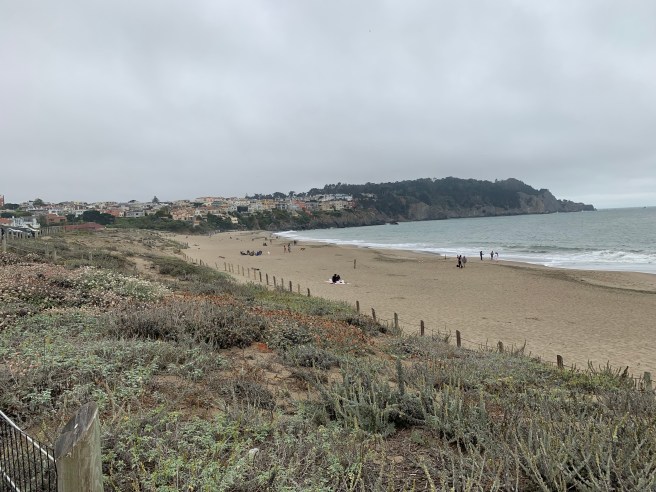
Switching gears, it is, to put it mildly, an interesting time in the world. As intimated by many of my posts, the world is best experienced through travel, rather than through a screen (I am, of course, sensitive to the irony as you read this post). With the pandemic, travel, for most, has been significantly curtailed. In my case, I was fortunate to visit Italy in October 2019, and since then it has been road trips in California and Oregon (for which I am eternally grateful) and closer to home, many local hikes, which have been immeasurably helpful in maintaining focus and regaining perspective. I have formed a local (San Francisco Bay Area) hiking group and on a monthly cadence have organized (and summarized) hikes to Montara Mountain, Purisima Creek Redwoods Open Space Preserve (OSP), and Marin Coastal Trail, with the next one to Rancho San Antonio OSP. The criteria for these are generally as follows: (1) 10-12 miles, (2) 3,000+ feet elevation gain, and (3) not more than an hour drive from my house. Suggestions welcomed.
Lastly, on the subject of experiential, hands-on learning (which is the best kind), I was privileged to attend last night a fabulous donor appreciation event organized by the San Mateo-Foster City Education Foundation (https://smfcedfund.org), which supports K-8 students throughout the district, by procuring musical instruments, Chromebooks, a maker space, and science lab equipment (to name a few) and funding (through a corporate donation) a science teacher on assignment (TOSA). I served on the Board from 2017-2021 and continue as an advisory board member, to help support the great work of this organization. Our focus is on experiential learning, whether in STEM or other areas, to give students the opportunity to learn by doing, away from the screen, to which they have been glued for most of the past eighteen months. I encourage you to learn more about this local education foundation (or one in your local community).
Comments welcomed.

 The Peninsula Hiking Club