
It’s early November, a few days after the US elections, uncertainty in the air. Indian Summer is over in Northern California, and Fall is finally in the air, cool, sometimes windy, with Winter right around the corner. While 2021 is still a few months away, it is always useful to think ahead, to set goals and to develop concrete plans to implement them. It is also as good a time as any to think about motivation, that which fuels and propels us, or at least sets us in a given direction. In thinking about this important subject, I recalled an article I had written some time ago (about 9 years ago). While my thinking has evolved somewhat, much of it is as relevant today as it was then. In short, motivation is a mixed bag, where no one size fits all (or many). Almost invariably, it changes over time. Appreciating this is fundamental in both business and personal affairs. Let me know what you think.
What’s your motivation? Money, power, purpose, self-actualization?
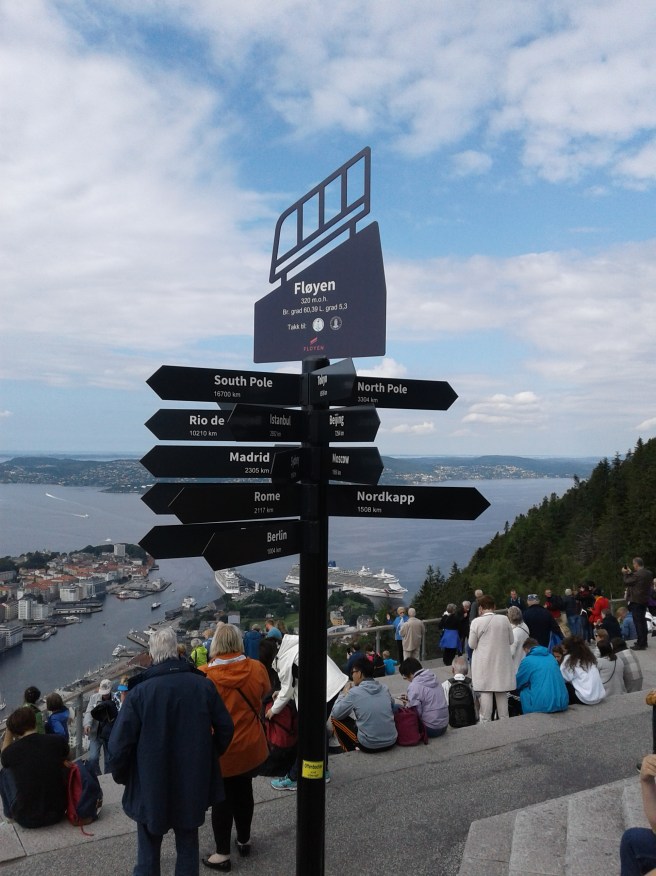
Bergen, Norway
Here’s a start: http://www.inc.com/ilya-pozin/9-things-that-motivate-employees-more-than-money.html#
Add to the reading list Drive (Daniel Pink), which I just started.
My first exposure to motivation theory (if you would call it that) was during an introductory psychology class, as a freshman in college, some 20 years ago. Recall Maslow’s pyramid, with self-actualization at the top. Fast forward 15 years to business school, where the core organizational behavior course distinguished between extrinsic (reward and punishment, namely in the form of compensation) motivation and intrinsic (learning, growth, etc.) motivation. In Drive, Pink refers to Motivation 1.0 (which would equate to the base of Maslow’s pyramid) and Motivation 2.0 (extrinsic) and alludes to Motivation 3.0 (intrinsic). Add to theory 10 years of experience working for startups, where motivation theory can be explored in very close quarters, and some things become apparent.
Above all, motivation is complicated. It’s axiomatic that what someone might find motivating may be of little interest to someone else. Some (to my mind, few) only care about compensation. For others, it’s compensation plus purpose, or learning, or improvement, or growth, or excelling at a certain activity, or just being a professional. As with most things, one size does not fit all, but at a minimum, you need to take care of the base of the pyramid. Sure, we’ve evolved, to some extent, beyond hunters and gatherers, but at the end of the day, self-actualization (typically) does not pay the mortgage. Put otherwise, you cannot replace a significant cut in compensation with praises. Which raises the question, how much is enough, such that perhaps we can lean more heavily on intrinsic motivators? Again, it’ll vary in each case. Now, in reality, if money is tight, all things being equal, you might as well offer praises, etc., because a smaller paycheck and praises are better than just a smaller paycheck.
Why motivation theory is perhaps seeing a resurgence today strikes me as somewhat odd. After all, isn’t unemployment 8.6% (and it would’ve been higher had 300,000 people not just stopped looking)? Put otherwise, someone (possibly as qualified as you) wants your job. It would seem that should be motivation enough.
Besides compensation, what matters? To the motivators mentioned above, I would add autonomy, flexibility, accountability (yes, it’s an intrinsic motivator), variety, quality of experience, opportunities to collaborate and to contribute to a significant project (e.g., open source development), esteem from peers, and mentorship, to name a few. At the end of the day, people want to feel that they actually did (accomplished) something, besides put food on the table. There’s a desire, I would have to assume, to point to some body of work (and to, at least momentarily, forget about the base of the pyramid). Again, none of these should diminish the primacy of the base (of the pyramid), which cannot be ignored.
Thoughts welcomed.

 The Peninsula Hiking Club
Nice post, very creative! Can’t wait for the next post!
LikeLiked by 1 person